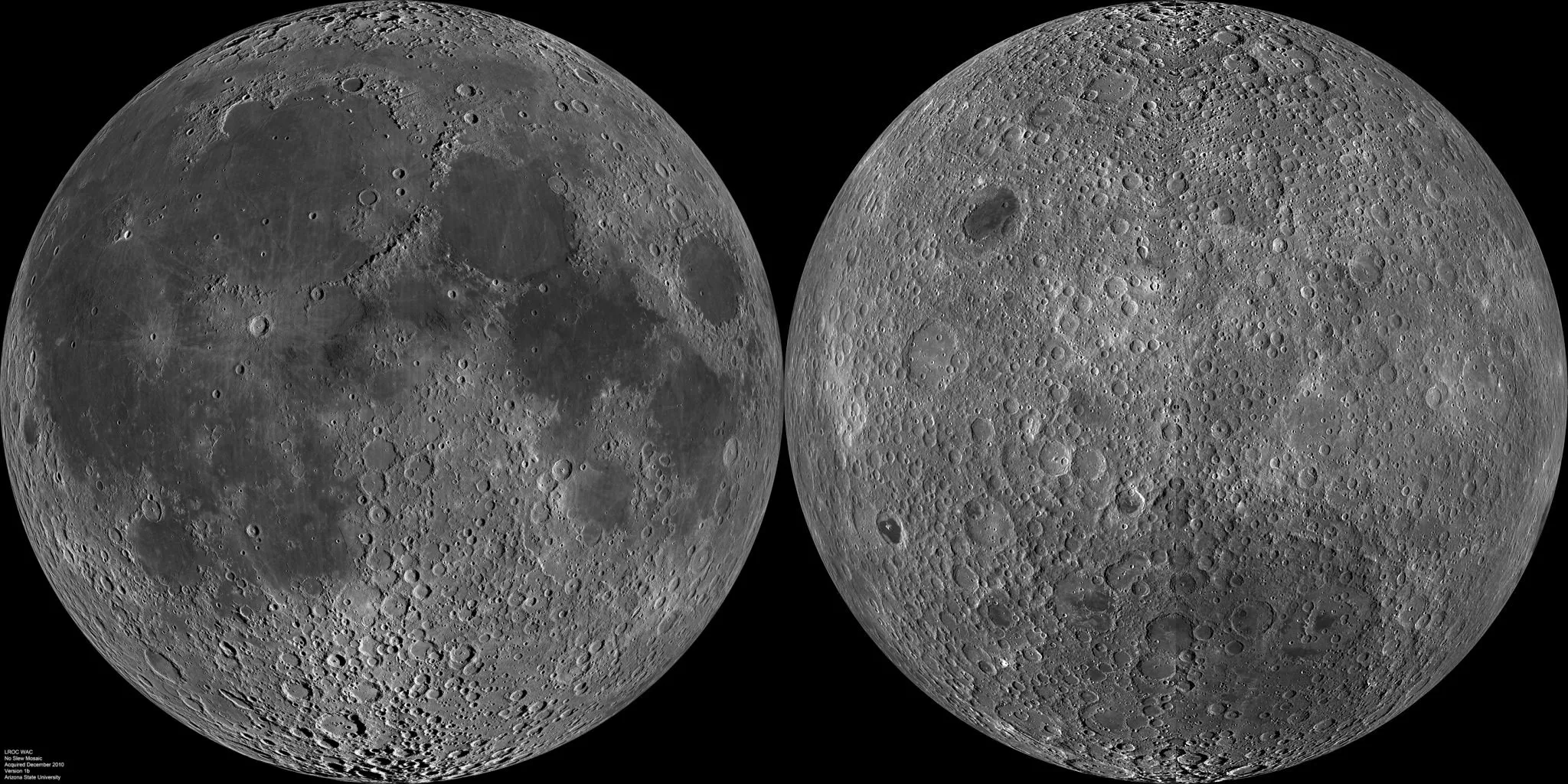

You know that face the Moon always shows us? The one we’ve turned into stories about rabbits, old men, or goddesses, depending on where your grandma’s from? Here’s the weird thing – we’ve literally never seen its other side. Not in all of human history. Not your great-great-grandparents, not the dinosaurs, nobody.
Turns out, the Moon’s playing the ultimate game of hide and seek, and gravity’s the referee.
The Spin We Never See
Common misconception: people think the Moon doesn’t spin. Oh, it spins alright. It just does it in perfect time with its trip around Earth. Try this: hold a dinner plate and walk around your kitchen table while keeping the design facing the table the whole time. You’re moving, but from the table’s perspective, the plate never turns. That’s our Moon – celestial sleight of hand.
Scientists call this “tidal locking,”. It sounds like some beach phenomenon, but it’s really just gravity being a control freak.
How Earth Bullied the Moon Into Submission
Back when the Moon was young and spun freely (like a kid after too much soda), Earth’s gravity started working on it like a cosmic slow-motion spell. Our planet’s pull created tiny stretches in the Moon – imagine kneading dough, but over billions of years. All that friction gradually braked the Moon’s spin until it matched its orbit. Now it’s stuck showing us just the one face, like a kid forced to face the wall in timeout.
Fun fact: This isn’t special. Most moons in our solar system are similarly locked to their planets. Pluto and its moon Charon take it further – they’re locked in a mutual stare like an old married couple who’ve run out of things to talk about.
The “Dark Side” Misconception (And Why It’s Dumb)
Calling it the “dark side” is like saying your back is always in shadow because you can’t see it in the mirror. The far side gets just as much sun – we just never see it lit up. Before space probes, this led to some wild speculation:
- 19th-century astronomers thought it might be covered in forests or oceans
- Sci-fi writers populated it with alien bases (looking at you, Transformers)
- Conspiracy theorists still claim NASA’s hiding something back there
The truth? When the Soviet Luna 3 probe finally snapped the first grainy photos in 1959, we saw a surface that looked like it lost a fight with an asteroid swarm – way more cratered than “our” side.
What Cultures Around the World Say About the Hidden Face
Every culture that’s ever stared at the Moon came up with stories to explain why it won’t show its back:
- China’s jade rabbit pounds medicine in its hidden lunar mortar
- Maori legends say the Moon’s face was scarred in a battle with the Sun
- English folklore claims the Man in the Moon was banished there for stealing
- Some Native American tales say it turns away in mourning
- Modern conspiracists insist it’s where the aliens parked their UFOs
Will We Ever See It Naturally?
Short of the Moon getting knocked loose by some cosmic pool cue? Not happening. But here’s a cool tidbit. The Moon actually wobbles enough (a motion called libration) that over time, we’ve glimpsed about 59% of its surface. The other 41%? That’s for astronauts and robots only.
Next time you catch the Moon staring down at you, remember – it’s not being rude. It’s just stuck in the universe’s longest staring contest, with Earth holding all the cards.
Final Thought
Maybe the real mystery isn’t what’s on the far side, but why we’re so obsessed with it. After all, don’t we all have a side we’d rather keep to ourselves?